
We are Not A MassHealth Provider
Why Crowns Are the Best Solution for Fragile Teeth


Taking care of your teeth is important so they remain healthy and functional for many years to come. The problem of fragile and weakened teeth is widespread, whether due to age, decay, or injury. Leaving fragile teeth untreated may lead to further dental issues, such as pain or tooth loss. The good news is that dental crowns represent a tried-and-true treatment for reinforcing and protecting these vulnerable teeth.
A dental crown is basically a tooth-shaped cap that protects and restores the function and appearance of a damaged or weakened tooth. It brings back a tooth’s size, shape, and function so it matches the rest of your smile. By preserving the strength of a tooth, in addition to strengthening its integrity, this procedure serves to prevent damage and provides an essential treatment for fragile teeth.
How Do Dental Crowns Work?
A dental crown procedure generally takes two appointments with your dentist. During the initial visit, the dentist will evaluate your fragile tooth and take X-rays to determine whether enough healthy tooth structure remains to support a crown. Crown placement may involve additional treatments if the tooth is severely decayed or damaged, such as a root canal.
After the tooth is prepared, your dentist will take an impression to create a custom crown to fit your tooth exactly. During this time, a temporary crown may be fitted to protect the tooth. When the permanent crown is ready, you’ll return for a second visit where it will be placed. The dentist will check the fit of your crown and ensure it matches your bite.
The Types of Crowns: Which One is Right for You?
The material used to make dental crowns is based on several factors: Where in the mouth the tooth is located, how badly it’s damaged, and personal preference.
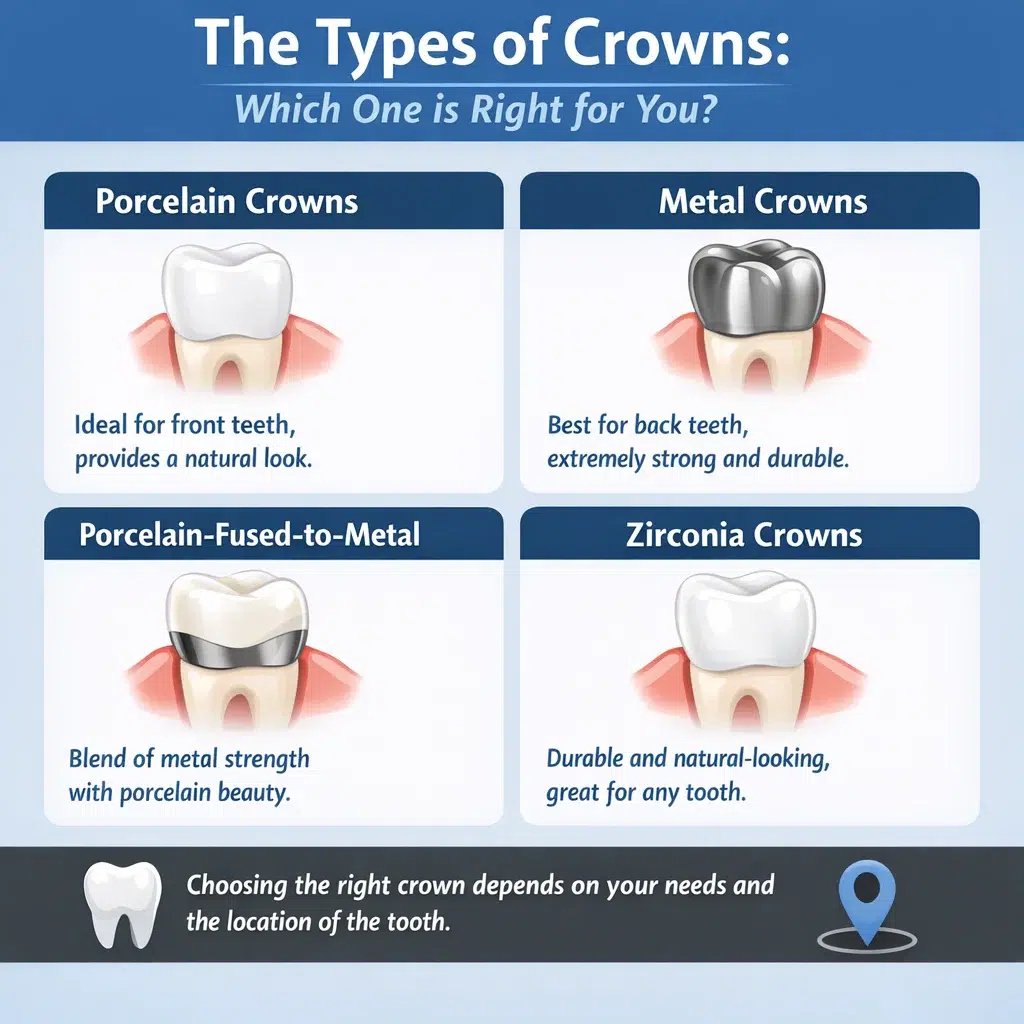
- Porcelain Crowns: It is the most common type for restoring front teeth, as it gives a natural look to a tooth.
- Metal Crowns: Used mostly for back teeth, metal crowns are very durable and may be the most resistant crown type.
- Porcelain-Fused-to-Metal Crowns: These combine the strength of metal with a more beautiful porcelain aesthetic.
- Zirconia Crowns: Zirconia crowns offer a perfect combination of durability and natural appearance, making them ideal for both front and back teeth.
Your dentist will help decide which material is best for your particular needs.
The Importance of Dental Crowns for Delicate Teeth
Dental crowns serve a vital function by protecting weak teeth and restoring their strength. The procedure involves placing a customized cap over a tooth, fully covering it, and preventing further decay or damage. This is especially helpful when the teeth are cracked, weak, or severely compromised by decay.
The main advantage of a dental crown is its restorative function for a weak tooth. When a tooth becomes compromised, whether from dental decay or injury, it may no longer be able to do its job. This can cause discomfort when eating or even speaking. Crowns restore the tooth to its original function so you can eat, speak, and smile again with confidence.
The Advantages of Crowns for Fragile Teeth
More than simply reinforcing the tooth, dental crowns have numerous benefits. Here are some reasons why crowns are the top choice for weak teeth:
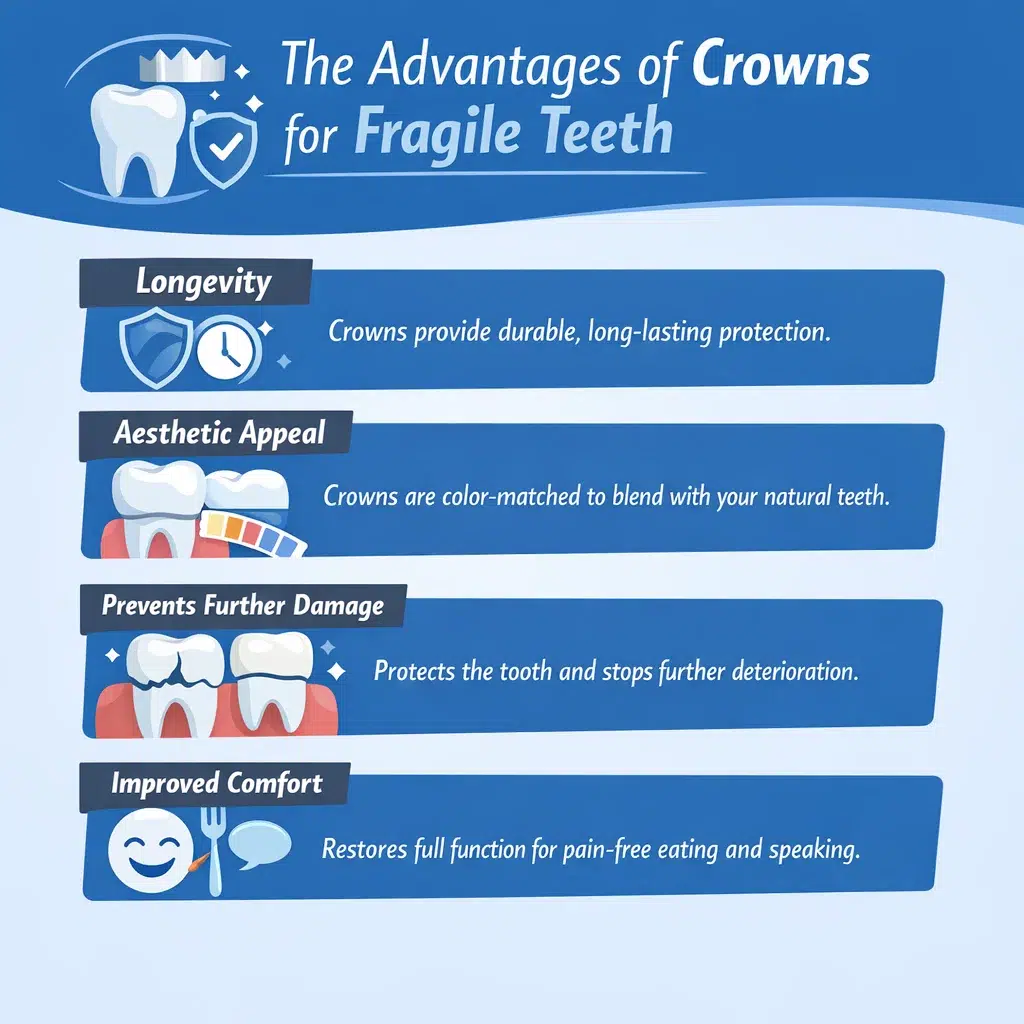
- Longevity: Crowns are designed to last for years, providing long-term protection and function for abraded teeth.
- Aesthetic Appeal: Unlike some older dental appliances, new crowns can be color-matched to your teeth for a nearly seamless look, restoring your smile not only functionally but also aesthetically.
- Prevention of Further Damage: By covering and protecting the natural tooth, a crown prevents further wear and tear in the patient’s mouth and reduces the risk of additional dental problems.
- Comfort: After the placement of dental crowns, the tooth is restored with full function, and you will be able to eat or speak comfortably without any pain or discomfort.
When is a Crown Needed on a Fragile Tooth?
Not all broken teeth require a crown. If the tooth is too damaged to be repaired with a filling, most dentists will recommend a dental crown. This includes teeth that are badly worn down, cracked, or have large cavities. Crowns are also commonly used for teeth that have undergone root canal treatment, as these procedures often compromise tooth structure and require additional protection.
A dentist may also recommend a crown for a tooth that has been injured in an accident, such as in sports. Regardless, when a tooth can no longer stand on its own due to disease or damage, a dental crown will provide the strength it needs to remain intact.
Caring for Your Crown and Sensitive Teeth
With good oral hygiene and by following the dentist’s advice, your crown will stay strong and your smile healthy for years to come.
- Brush Twice A Day: Make sure you brush your teeth for two minutes, at least twice per day, with a fluoride-containing toothpaste to prevent plaque from building around both your crown and natural teeth.
- Floss at Least Once a Day: Flossing helps remove food particles and plaque from between your teeth and around your crown, helping keep your gums and teeth healthy.
- Watch Hard Foods: Keep in mind that chewing hard foods, such as nuts or even ice, can break your crown or other teeth.
- When to Wear A Mouth Guard: If you grind your teeth at night, consider wearing a mouth guard to prevent it from disrupting your crown or placing unnecessary stress on your natural teeth.
- Have Regular Check-Ups At Your Dentist: This will also help create a record of your crown and ensure the surrounding teeth are healthy, with any problems detected as early as possible.
- Follow Instructions Provided: Your dentist will give you specific aftercare instructions based on your individual needs. Following these guidelines will help you get the most out of your crown.
Restore Your Smile with Crowns
If your tooth is fragile, a dental crown will not only provide the attention it needs but also restore its strength and function. Crowns provide a durable, long-lasting solution that helps prevent further damage to your teeth and improves the appearance of your smile. Having a crown placed can restore both the health and beauty of your teeth, whether you have a cracked, weak, or decayed tooth.
If you are considering a dental crown, Khanani Family Dental is happy to assist you at every stage of the process. Call us to schedule an appointment to learn how dental crowns in Holden can enhance your well-being and confidence. We are committed to providing you with a healthy, beautiful smile.
Questions People Ask About Dental Crowns
How long do dental crowns last?
With proper care, dental crowns can last 10 to 15 years or more. Regular dental check-ups, good oral hygiene, and avoiding hard foods can help extend the lifespan of your crown, ensuring it stays in great condition.
Are dental crowns painful?
Getting a dental crown is typically not painful. Your dentist will numb the area before the procedure, and most patients feel minimal discomfort afterward. Any temporary soreness can be managed with over-the-counter pain relievers.
How do I care for my dental crown?
To care for your dental crown, brush and floss regularly, just as you would with natural teeth. Avoid chewing hard foods or using your teeth as tools, and visit your dentist for routine check-ups to ensure your crown remains intact.
Can a dental crown match the color of my teeth?
Yes, dental crowns can be made from materials that closely match the color of your natural teeth. Porcelain and zirconia crowns are often used for front teeth, ensuring a seamless, natural-looking result that blends with your smile.
Do I need a crown for every fragile tooth?
Not every fragile tooth requires a crown. Your dentist will evaluate the extent of the damage and recommend the most suitable treatment. Crowns are typically used when the tooth is severely weakened or has large cavities that can’t be restored with a filling.