We are Not A MassHealth Provider
Is Whitening Toothpaste Safe for Daily Use?


Whitening toothpaste can be safe for daily use, but only when you choose the right one and use it correctly. Many people in Holden want their teeth to look cleaner and brighter without starting a full whitening treatment. That is understandable. Coffee, tea, berries, sauces, and normal aging can all leave teeth looking dull over time.
The main thing to know is simple. Whitening toothpaste does not work like professional whitening. It mostly removes surface stains. It does not deeply change the natural shade of your teeth. If you are comparing daily toothpaste with teeth whitening, it helps to understand what each option can and cannot do.
What Whitening Toothpaste Actually Does
Whitening toothpaste usually contains mild polishing ingredients. These ingredients help scrub away stains that sit on the outer surface of the enamel. Some formulas may also contain low amounts of peroxide, but most toothpastes work through stain removal rather than deep whitening.

This means it may help with stains from:
- Coffee
- Tea
- Red wine
- Dark sauces
- Tobacco
- Some deeply colored foods
It usually does not change stains that come from inside the tooth. It also will not whiten crowns, veneers, fillings, or bonding.
Can You Use Whitening Toothpaste Every Day?
For most adults, whitening toothpaste can be used daily if it is gentle and approved by a recognized dental organization. The bigger concern is not daily use itself. The concern is using a product that is too abrasive or brushing too hard.
Some people think stronger brushing gives better results. It does not. Hard brushing can wear enamel and irritate the gums. Once enamel becomes thin, teeth may look more yellow because the darker inner layer shows through more clearly.
Daily use is safer when you:
- Use a soft-bristle toothbrush
- Brush with light pressure
- Choose fluoride toothpaste
- Avoid harsh charcoal or gritty formulas
- Stop if sensitivity gets worse
When Whitening Toothpaste May Not Be Right for You
Whitening toothpaste is not the best choice for everyone. Some people should be more careful, especially if their teeth already feel sensitive. If you are exploring options like teeth whitening, it is important to know when daily whitening toothpaste may not be the right fit for your oral health.
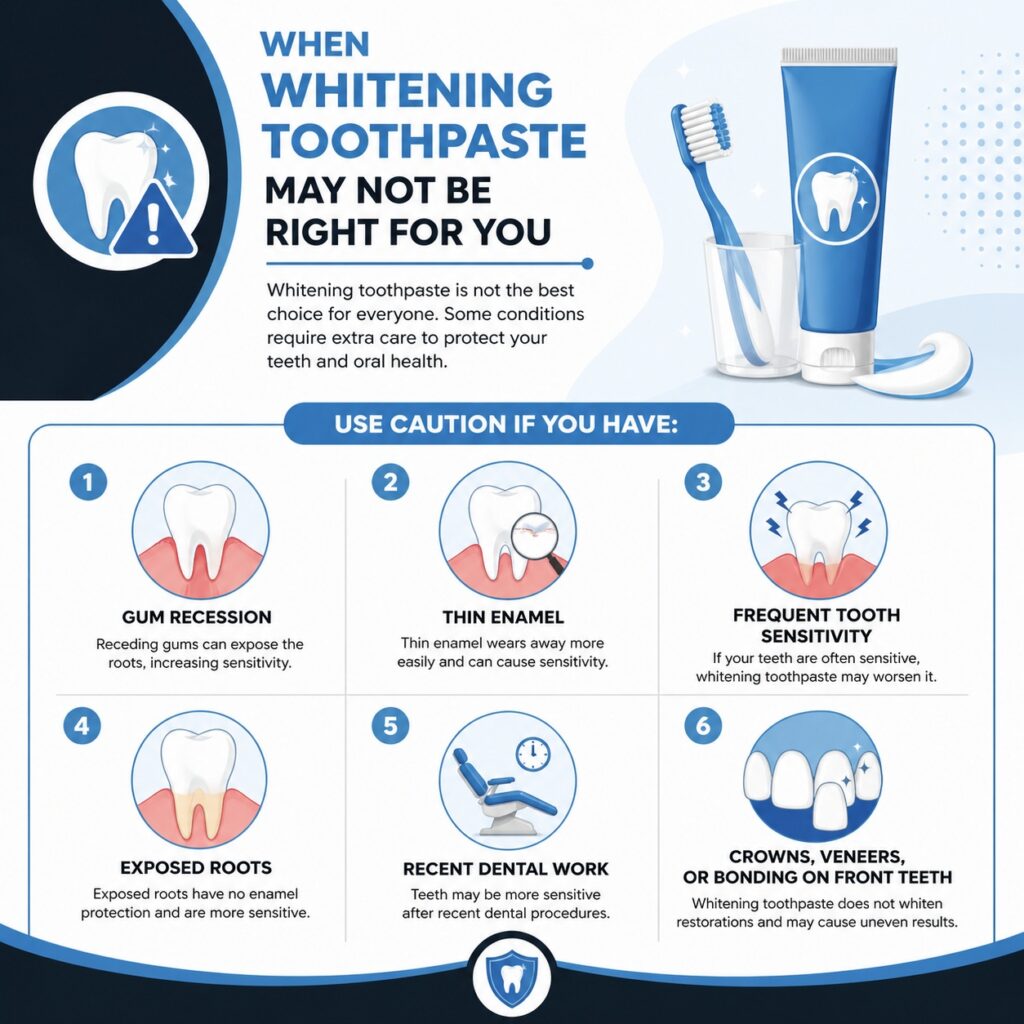
Use caution if you have:
- Gum recession
- Thin enamel
- Frequent tooth sensitivity
- Exposed roots
- Recent dental work
- Crowns, veneers, or bonding on front teeth
If whitening toothpaste causes sharp pain, burning gums, or ongoing sensitivity, stop using it and ask a dental provider for guidance. Sensitivity can stem from enamel wear, cavities, gum recession, or other issues that require attention.
What Locals in Holden Should Know
Holden residents often want simple care that fits into a busy routine. Whether you are heading down Main Street, visiting Eagle Lake, or commuting toward Worcester, toothpaste feels like the easiest place to start.
That is fine, but expectations matter. Whitening toothpaste can help maintain a brighter look after cleanings or whitening treatment. It is not designed to create dramatic shade changes.
If stains keep returning quickly, the issue may be due to daily habits. Coffee, tea, sports drinks, and acidic foods can stain or weaken enamel over time. Rinsing with water after these drinks can help reduce stain buildup.
How Whitening Toothpaste Compares to Professional Whitening
Whitening toothpaste works on the surface. Professional whitening differs because it uses whitening agents that penetrate deeper into stains under dental supervision.
This is why toothpaste may slightly brighten teeth, while professional whitening can produce more visible results. Khanani Family Dental’s website notes that its whitening option includes custom-fitted take-home trays and professional whitening agents, usually worn for about an hour per day for two to three weeks.
That does not mean everyone needs professional whitening. It simply means toothpaste and whitening treatment have different purposes.
Whitening toothpaste is for maintenance. Professional whitening is for greater cosmetic change.
How to Choose a Safer Whitening Toothpaste
The safest whitening toothpaste is usually one that supports both appearance and oral health. Do not choose only by the word “whitening” on the box.
Look for:
- Fluoride
- ADA Seal of Acceptance
- Sensitivity-friendly formulas if needed
- Smooth texture
- Clear ingredient labeling
Avoid products that promise very fast or extreme whitening. Also, be careful with charcoal toothpaste. Some charcoal products can be abrasive and may not be ideal for everyday enamel protection.
Simple Habits That Help Keep Teeth Brighter
Whitening toothpaste works better when your daily habits support it. Small changes can reduce stains without complicating your routine.
Helpful habits include:
- Brush twice daily
- Floss once daily
- Rinse with water after coffee or tea
- Use a straw for stain-causing drinks when possible
- Avoid brushing right after acidic foods or drinks
- Keep up with routine dental cleanings
If you drink coffee before work or enjoy tea during colder Holden mornings, rinsing with water afterward can help. It is simple, but it works.
Should You Use Whitening Toothpaste Twice a Day?
Some people can use it twice daily without problems. Others may do better with it once daily, using a regular fluoride toothpaste at night.
A balanced routine may look like this:
- Morning: whitening toothpaste
- Night: fluoride toothpaste for cavity protection
This can be helpful for people who want stain control but also want to avoid sensitivity. If your teeth feel sore or sensitive, reduce use and ask your dentist what works best for your situation.
Common Mistakes to Avoid
Whitening toothpaste is simple, but people often misuse it.
Avoid these mistakes:
- Brushing harder to speed up whitening
- Using multiple whitening products at once
- Ignoring sensitivity
- Using abrasive powders daily
- Expecting toothpaste to whiten dental work
- Skipping dental cleanings
More product does not always mean better results. Gentle consistency is safer than aggressive brushing.
A Clear Answer Before You Choose
Whitening toothpaste is safe for many people when used properly. It can help remove surface stains and keep teeth looking cleaner. However, it is not a replacement for professional dental advice or stronger whitening treatment when deeper stains are present.
If your teeth are sensitive, heavily stained, or have visible dental work, it is better to ask before starting daily use.
Brighter Teeth Start With the Right Routine
A brighter look should never come at the expense of healthy enamel. Whitening toothpaste can be useful, but the right choice depends on your teeth, habits, and sensitivity.
If you are considering options beyond daily products, including teeth whitening in Holden, MA, it helps to understand what will work safely for your specific needs. For guidance on safe whitening choices, Khanani Family Dental can help you understand what fits your routine and whether at-home care or professional whitening makes more sense.
Common Questions People Ask
1. Is whitening toothpaste bad for enamel?
Not always. Many whitening toothpastes are safe when used correctly. Problems can happen when a formula is too abrasive or when someone brushes with too much pressure for too long.
2. How long does whitening toothpaste take to work?
Most people notice small changes after a few weeks of steady use. Results depend on stain type, brushing habits, and whether the discoloration is on the surface or deeper inside the tooth.
3. Can whitening toothpaste remove yellow stains?
It may reduce yellow surface stains from food, drinks, or tobacco. It usually cannot change deeper discoloration or the natural color of teeth the way professional whitening can.
4. Is whitening toothpaste safe for sensitive teeth?
Some formulas are made for sensitive teeth, but not every whitening toothpaste is gentle. If sensitivity increases, switch to a toothpaste with a lower sensitivity and ask a dental provider for advice.