We are Not A MassHealth Provider
How Dental Veneers Can Correct Minor Misalignment Without Braces


Slightly crooked teeth can steal more confidence than people admit. A tooth that turns just a degree or two, a small gap that draws the eye — these aren’t dramatic alignment problems, but they can make someone self-conscious about smiling in photos, at work, or in social situations. And when the thought of wearing braces for 18 to 24 months enters the picture, many people simply accept things as they are.
That’s a longer road than necessary for many patients. For mild misalignment that’s purely cosmetic, dental veneers offer a faster, more direct path to a smile you’re comfortable showing off.
What Veneers Do for Misaligned Teeth
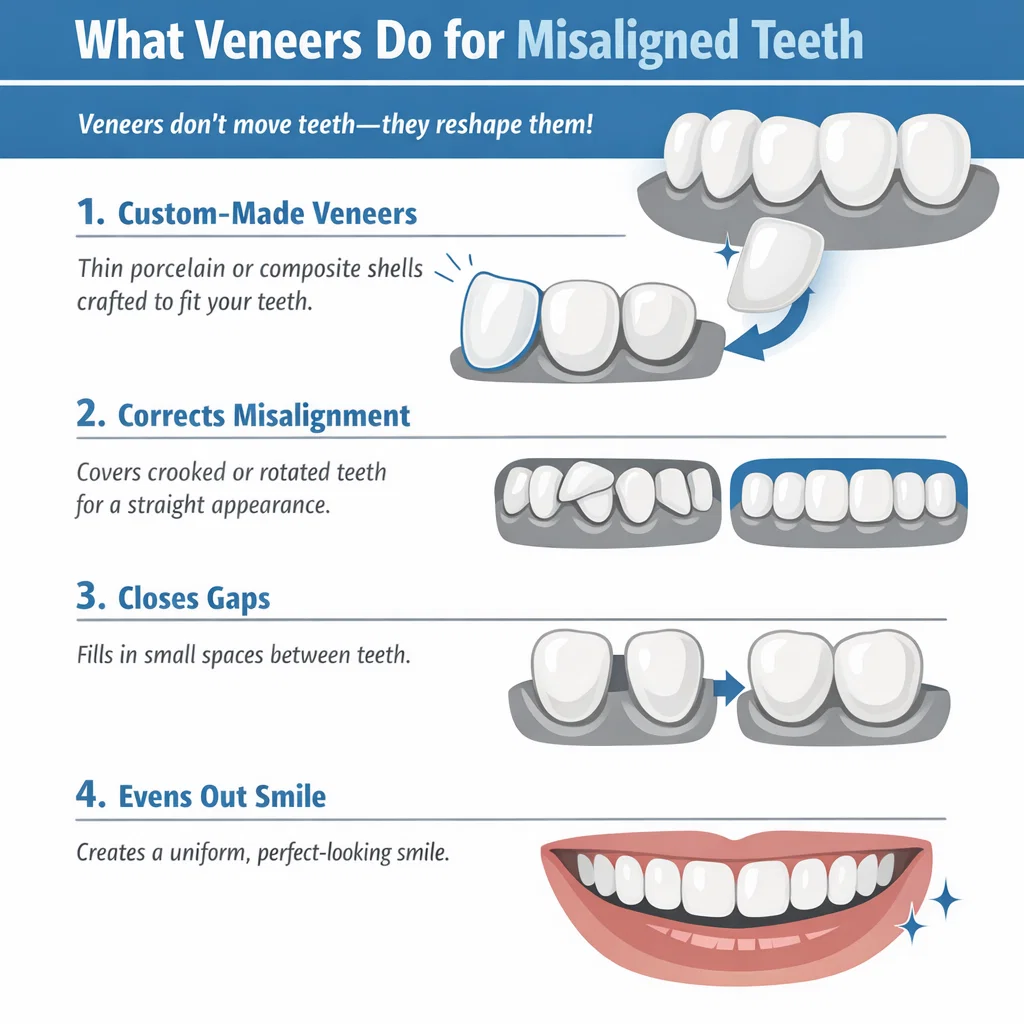
It’s worth being clear about how veneers work because there’s a common misconception that needs to be cleared up. Veneers don’t move teeth. They don’t shift roots or reposition anything below the gumline. What they do is reshape the visible front surface of each tooth so that, once in place, the overall smile appears even, straight, and uniform.
Think of it as precision sculpting. Each veneer is custom-made from porcelain or composite resin to fit the dimensions and color of your smile. A tooth that sits slightly rotated can look perfectly aligned once the veneer is designed to visually correct that angle. A minor gap between front teeth can close completely. Slight crowding can be smoothed out. The result is a straight-looking smile achieved not through movement, but through careful reshaping of what’s visible.
That’s why patients in Holden ask about are well-suited for cosmetic correction — not for structural or bite problems, but for the kind of minor misalignment that bothers you in every photo but doesn’t affect how you chew or speak.
When Veneers Are the Right Call and When They’re Not
Veneers work well in specific situations. Here’s what they’re genuinely suited for:
- Minor rotations: A tooth that’s twisted slightly off-axis can appear correctly positioned once a veneer adjusts the visible surface.
- Small gaps (diastemas): Veneers can close spaces between teeth, particularly at the front of the mouth, creating a more uniform appearance.
- Mild crowding: Where a few teeth overlap slightly, veneers can mask the issue by covering the front surfaces and creating the appearance of even alignment.
- Uneven tooth size or shape: When one or two teeth are shorter, narrower, or otherwise different in shape from the rest, veneers can bring them into visual alignment with the surrounding teeth.
That said, veneers are a cosmetic solution. They’re not the right answer for moderate-to-severe misalignment, significant bite problems (overbite, underbite, crossbite), or cases where jaw position affects function. In those situations, orthodontic treatment, such as braces or clear aligners, addresses the underlying structural issue and often needs to come first. Sometimes a combination of treatments makes the most sense: orthodontics to correct the position, veneers to refine the final appearance. Your dentist will assess your bite, bone structure, and alignment during a consultation to help you determine which path best fits your situation.
Porcelain vs. Composite Veneers: A Quick Comparison
Both types can address minor misalignment, but they have different properties worth knowing about.
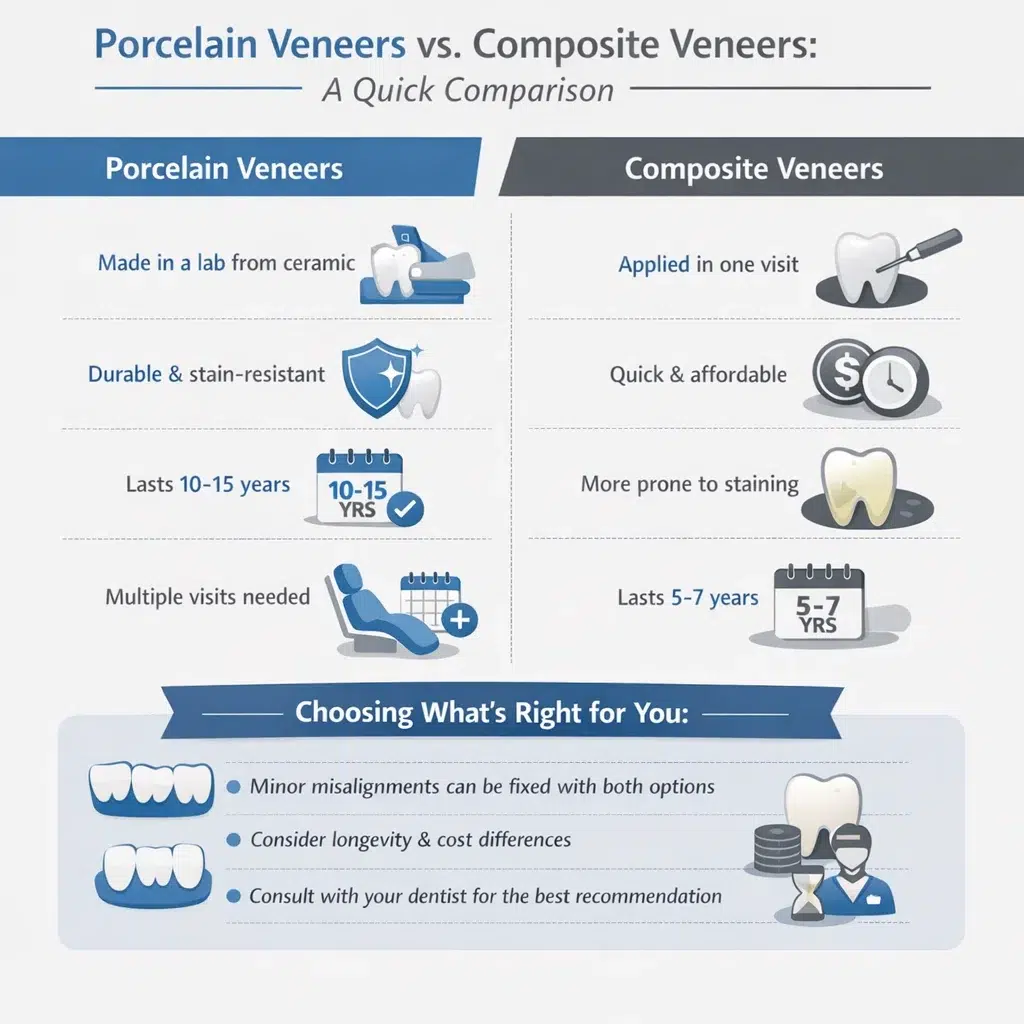
Porcelain veneers are made in a dental laboratory from high-quality ceramic. They’re durable, stain-resistant, and very closely mimic the light-reflecting quality of natural tooth enamel. With proper care, porcelain veneers can last 10 to 15 years. The trade-off is that the process usually requires two or three visits, including one to prepare the tooth and place temporary veneers while the permanent ones are fabricated.
Composite resin veneers are applied directly to the tooth in a single visit. Your provider shapes the material chairside and cures it with a special light. They cost less upfront and preserve slightly more enamel, but they’re more susceptible to staining over time and generally have a shorter lifespan than porcelain.
For minor misalignment, both can work. The choice often comes down to how many teeth are involved, your long-term goals, and your provider’s recommendations after an examination of your bite and enamel.
How to Care for Your Veneers Long-Term
Veneers don’t require a complicated routine, but a few habits make a real difference in how long they last.
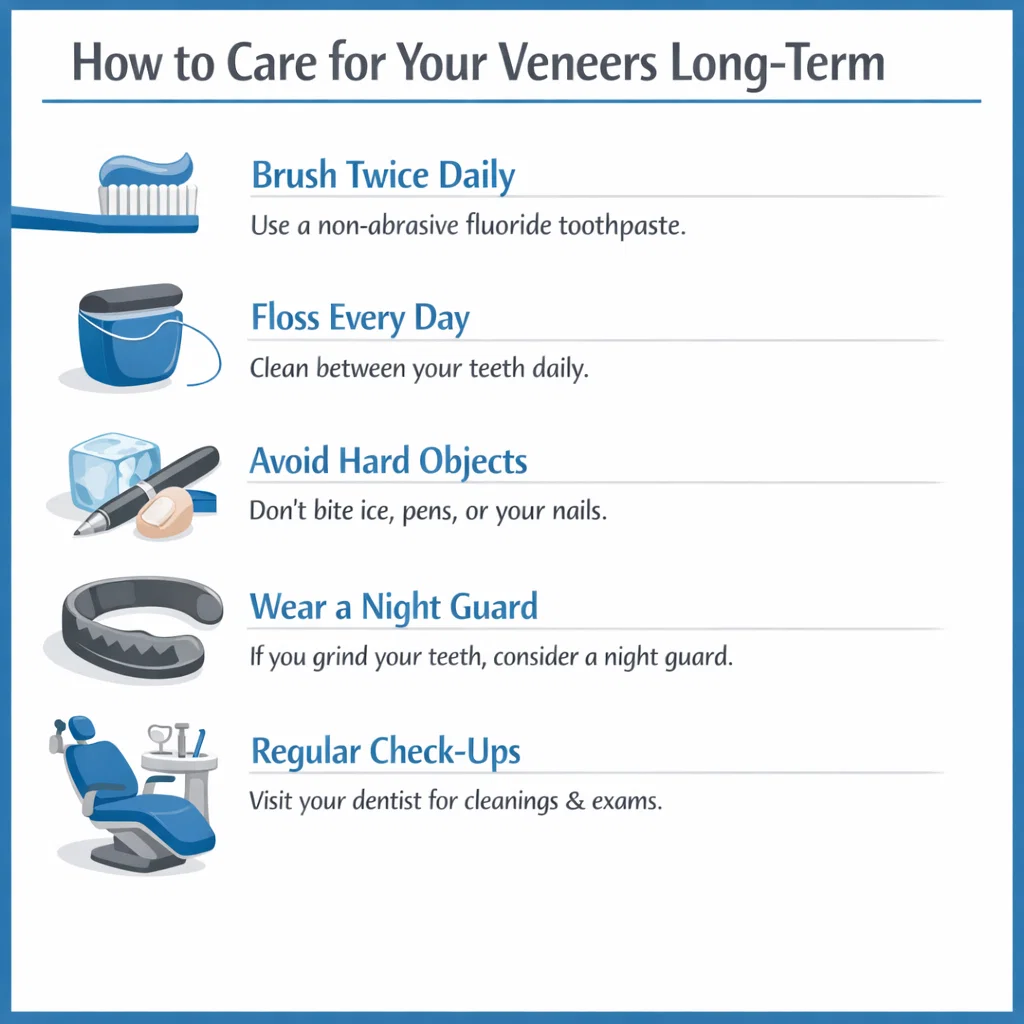
- Brush twice daily with a non-abrasive fluoride toothpaste.
- Floss regularly to protect the gumline around the veneer margins.
- Avoid biting hard objects like ice, pens, and fingernails, which can chip the porcelain.
- If you grind your teeth at night, a custom night guard is worth discussing with your provider.
- Keep up with regular cleanings and exams. Professional monitoring helps catch early wear or fit issues before they become bigger problems.
Veneers can deliver patients a visibly straight smile in a matter of weeks rather than months without brackets, wires, or daily tray management.
Schedule a consultation with Khanani Family Dental today to get a personalized assessment and see what treatment options look like for your teeth.
People Also Ask
1. Do veneers damage the natural tooth underneath?
The preparation process permanently removes a thin layer of enamel, so veneers are considered an irreversible treatment. However, the amount removed is minimal — typically less than 0.5 mm. Your underlying tooth structure remains largely intact, and the veneer protects the front surface of the tooth going forward.
2. Can veneers be placed on just one or two teeth, or do you need a full set?
Veneers can absolutely be placed on individual teeth. Single-tooth or two-tooth veneer applications are common when the concern is limited to one area. That said, your provider will discuss how to match the veneer shade and shape to your natural teeth so the result looks cohesive rather than patchy.
3. Can veneers be removed or replaced if I change my mind later?
Because enamel removal is permanent, veneers themselves are a long-term commitment. They can, however, be replaced when they reach the end of their lifespan (10 to 15 years for porcelain). If a veneer chips or cracks, it can be repaired or replaced without affecting the rest of your smile. You won’t be able to simply “go back” to your natural tooth, which is why the consultation and decision-making phase is so important before you begin.